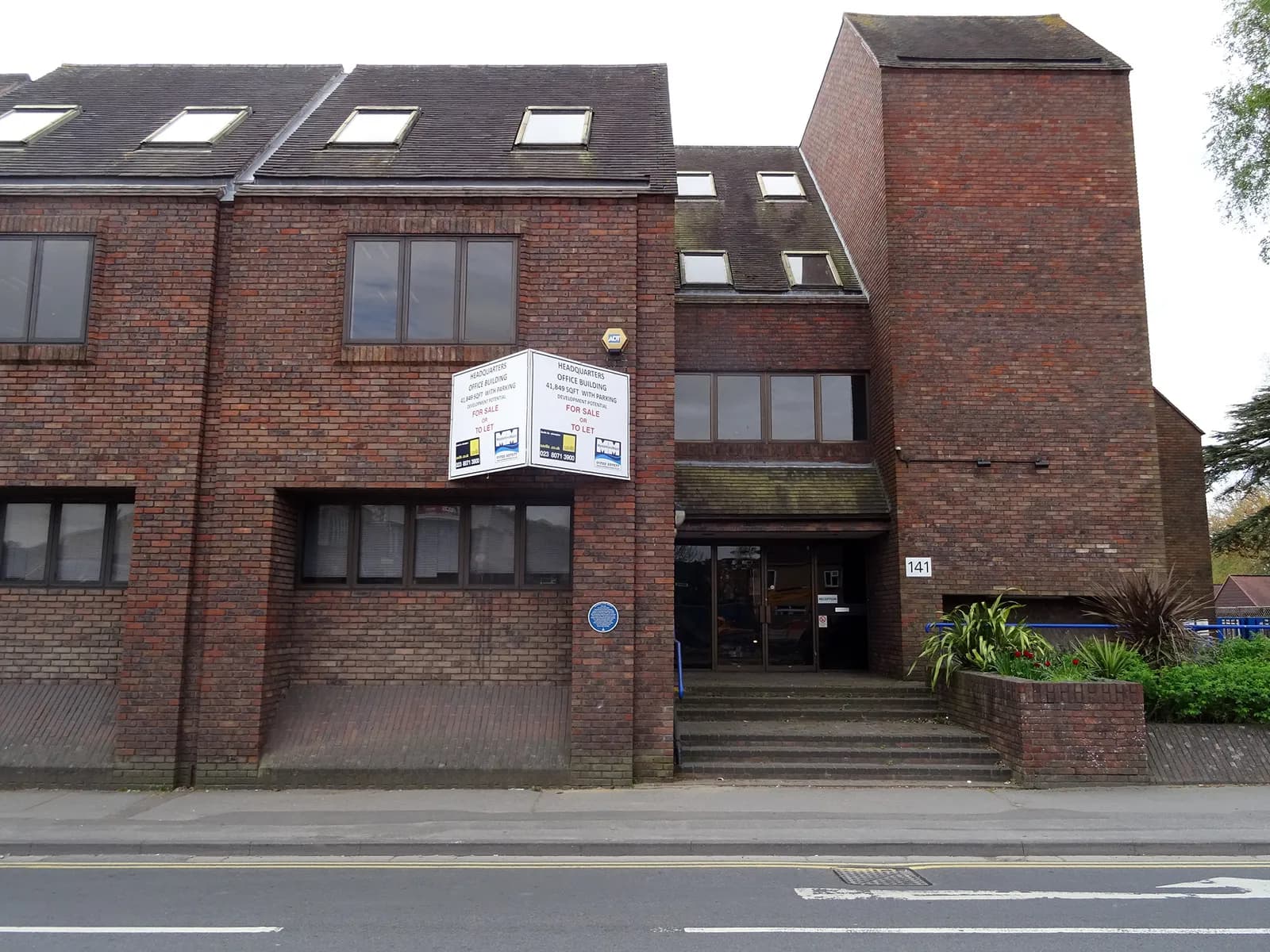
After Luftwaffe raids destroyed Supermarine's main factories in Southampton during the autumn of 1940, Spitfire production was scattered to shadow factories across southern England. Salisbury became one of the most important of these hidden centres, with requisitioned city-centre garages turning out components for nearly 2,000 aircraft between 1941 and 1947.
Dispersal to Salisbury
The Air Ministry ordered the dispersal of Supermarine's operations following the bombing of its Southampton premises in September 1940. Salisbury was selected as a major production site. At 141 Castle Street, a former Wilts & Dorset bus engine garage was requisitioned for machining Spitfire parts; two further garages in the city were also taken over. Two assembly sheds were erected on Hudson's Field to support the work.
From Components to Combat Aircraft
Sub-assemblies produced in Salisbury were transported to local airfields for final construction and flight testing. High Post airfield, to the north of the city in Durnford parish, and Chattis Hill, to the northeast near Stockbridge, served as the assembly and test-flight sites. Anna Valley Motors in Salisbury held a specific wartime responsibility: it was reportedly the sole producer of wing leading-edge fuel tanks for photo-reconnaissance Spitfires. Once completed, finished aircraft were delivered directly to RAF stations.
A Workforce in the Shadows
The workshops were staffed predominantly by young women who were trained for precise tasks in aircraft manufacture, in many cases without any prior engineering background. Some production extended into home-based workshops and garden sheds, where workers fabricated small parts. Historical accounts suggest that the full scale of the work was not widely known among local residents at the time.
Recognition
For decades, the extent of Salisbury's contribution remained little known outside official circles. A blue plaque at 141 Castle Street records that the machining of Spitfire parts shown in the wartime film The First of the Few was carried out at that location. In July 2021, a memorial was unveiled on Castle Road, on the site of one of the former factories. It features a life-size fibreglass Mk IX Spitfire and serves as a public reminder of the city's wartime role.